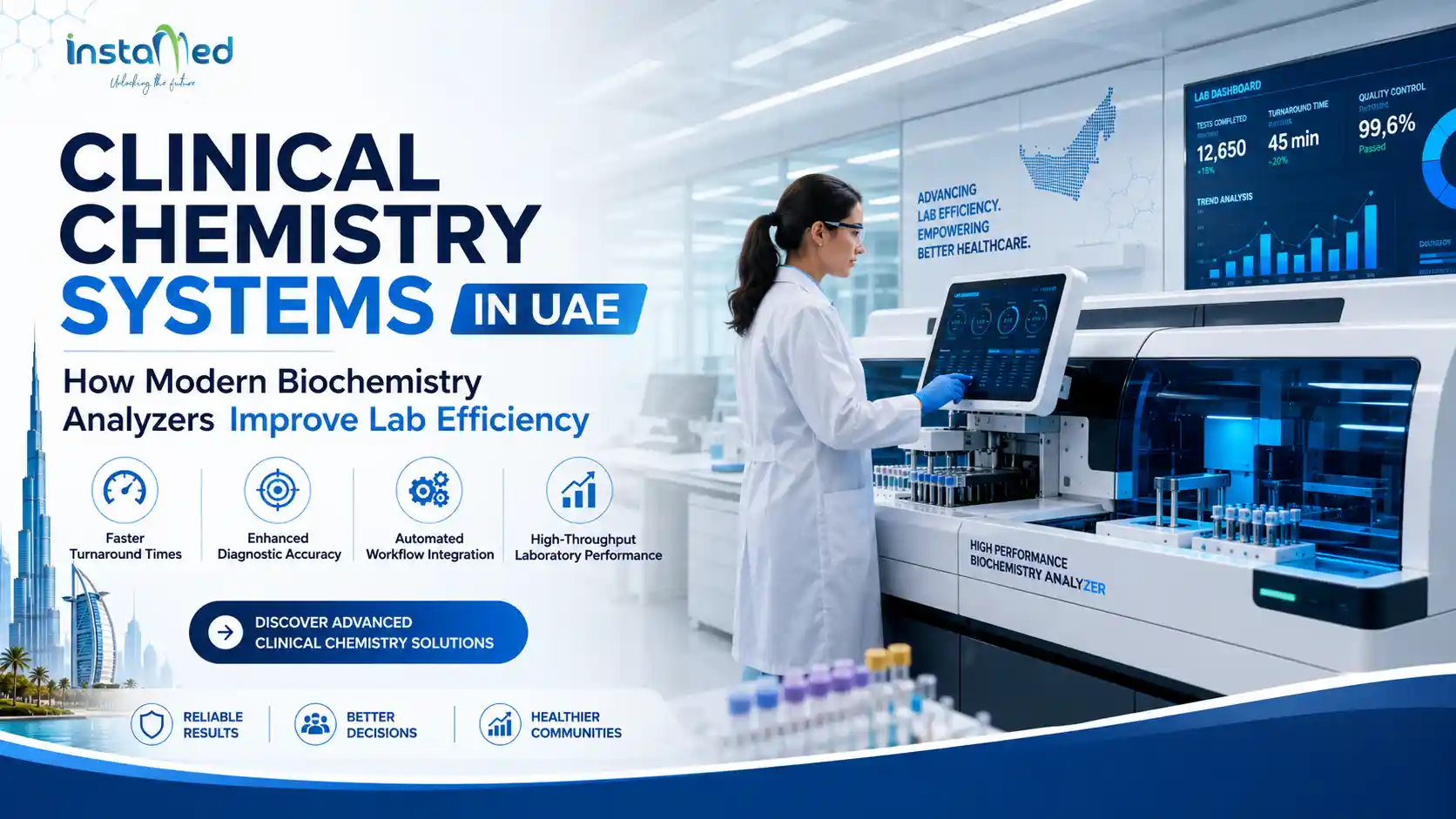
Clinical chemistry remains one of the most important pillars of routine laboratory diagnostics. Chemistry analyzers are used to measure metabolites, electrolytes, proteins, enzymes, and drugs in samples such as serum, plasma, urine, and other body fluids, helping laboratories support fast clinical decisions every day. For hospitals, diagnostic centers, and reference labs, choosing the right Clinical Chemistry Systems in UAE is not just an instrument purchase; it is a workflow decision that affects turnaround time, reliability, staffing efficiency, and long-term scalability.
As testing demand grows, laboratories are under pressure to deliver faster results without compromising analytical quality. That is why modern clinical chemistry systems are increasingly built around automation, scalable throughput, intelligent sample handling, optimized reagent use, and integration with broader lab workflows. This shift is especially relevant for laboratories that want to support routine chemistry, electrolyte testing, and future automation expansion from a single strategic platform.
Why Clinical Chemistry Systems in UAE still matter in modern laboratories
Even in highly specialized diagnostic environments, clinical chemistry remains a daily workhorse. Routine panels, metabolic markers, liver and kidney function tests, electrolyte assessment, and many other essential parameters continue to rely on robust chemistry workflows. A laboratory may invest in advanced molecular or immunoassay technologies, but chemistry often remains central to volume, continuity, and core diagnostic value.
What laboratories need today is not simply a chemistry analyzer that “runs tests.” They need a system that matches their sample volume, available footprint, staffing model, maintenance expectations, and reporting workflow. In practice, this means choosing between compact routine analyzers, high-throughput chemistry platforms, dedicated electrolyte solutions, and automation-ready configurations that can grow with the lab.
What to look for in a modern clinical chemistry analyzer
A modern Clinical Chemistry Systems in UAE should support three goals at the same time: dependable analytical performance, efficient workflow, and sustainable operations. Reliable pipetting, clot detection, precise washing, and continuous loading features help reduce interruptions and improve confidence in daily routine testing. At the same time, optimized reagent and water usage matters because cost-efficiency is now part of laboratory performance, not a separate issue.
For growing laboratories, throughput and scalability are equally important. A platform that works well for current volume but cannot adapt to future demand may become a bottleneck very quickly. That is why many laboratories now prefer systems that can serve low- to high-volume needs through a structured portfolio rather than a one-size-fits-all approach.
From compact routine testing to high-throughput chemistry
For laboratories that need a compact but capable workhorse, InstaMed’s clinical chemistry portfolio already speaks directly to practical lab requirements in the UAE. The Biossays 240 Plus is presented as an efficient and compact analyzer delivering up to 240 tests per hour, with continuous sample and reagent loading, optimized reagent and water usage, and advanced pipetting plus clot detection features for reliable day-to-day chemistry testing. That makes it relevant for smaller laboratories, clinics, and facilities that need dependable routine performance without moving into a larger automation footprint.
For medium- to large-volume laboratories, the scale changes significantly. Snibe’s Biossays C8 is described as a high-throughput automatic biochemistry analyzer that can reach up to 1,600 tests per hour in a single module and is designed for efficient, scalable automation. InstaMed’s page also highlights its large sample and reagent capacity, maintenance-free reaction modules, and front-loading design for integration with broader lab automation systems. This is exactly the type of positioning that appeals to labs planning growth, centralization, or stronger workflow standardization.
Why dedicated electrolyte and iCa²⁺ capability matters
Clinical chemistry is not only about routine broad-spectrum panels. Some laboratories also need strong performance in electrolyte and ionized calcium testing, particularly in settings linked to critical care, emergency medicine, and metabolic monitoring. Snibe’s Biossays E6 Plus is positioned as a fully automatic analyzer for electrolyte and direct iCa²⁺ measurement, with the manufacturer emphasizing that direct ionized calcium measurement provides a more precise indicator of physiological state than total calcium alone.
This matters from an SEO and buyer-intent perspective because many searchers are not only looking for a “biochemistry analyzer.” They may actually be searching for an electrolyte analyzer in UAE, an iCa analyzer, or a clinical chemistry solution for critical care laboratories. A blog that naturally covers those terms can help you rank for wider but highly relevant search intent while still driving readers toward the same solution category.
The future of chemistry labs is workflow integration
One of the strongest themes across manufacturer messaging is that chemistry performance alone is no longer enough. Laboratories increasingly want integrated systems that simplify logistics, reduce manual handling, improve turnaround times, and support expansion. Roche describes the value of integrating immunoassay and clinical chemistry in a single serum work area to streamline workflows and simplify operations, while Snibe positions SATLARS-T8 as a versatile total laboratory automation solution with strong compatibility and intelligence.
On InstaMed’s clinical chemistry page, SATLARS-T8 is presented as an advanced laboratory automation solution with modular architecture, multi-channel sample transport, STAT handling, and continuous centrifugation. For larger laboratories, this is not just a premium add-on. It is a strategic answer to staffing limitations, rising sample volumes, and the need for better consistency across pre-analytical and analytical stages.
How UAE laboratories can choose the right clinical chemistry system
The best chemistry analyzer depends on workload and workflow, not just on headline throughput. A smaller facility may prioritize compact size, ease of operation, and cost control. A busy private laboratory may need a reliable mid-volume solution that balances productivity and maintenance efficiency. A central lab or hospital network may focus on automation compatibility, high-throughput expansion, and specialized electrolyte capability alongside core chemistry.
That is why a supplier matters almost as much as the analyzer itself. InstaMed positions itself as a trusted expert in sourcing, supply, and service for hospitals, laboratories, and clinical research organizations in the UAE, and that local support angle is important for buyers evaluating installation, training, service continuity, and application fit.
Why InstaMed is well placed for clinical chemistry in the UAE
A strong clinical chemistry partner should be able to support different lab sizes, not just sell one instrument. InstaMed’s Snibe clinical chemistry portfolio covers compact routine chemistry, scalable high-throughput biochemistry, dedicated electrolyte and iCa²⁺ testing, and lab automation. That breadth helps you speak to a wider set of customer needs while keeping the story clear: UAE laboratories can work with one local supplier for multiple chemistry workflow requirements.
For SEO, this is also important because the blog can naturally connect several relevant search terms under one theme: clinical chemistry analyzer UAE, biochemistry analyzer UAE, electrolyte analyzer UAE, lab automation UAE, and Snibe biochemistry analyzer UAE. When written naturally and linked internally to your solution pages, this kind of article can attract both researchers and ready-to-buy visitors.
Conclusion
Clinical chemistry systems continue to shape the operational strength of modern laboratories. The right analyzer can improve turnaround time, reduce manual intervention, support quality testing across daily workloads, and create a pathway toward broader automation. For laboratories in the UAE, the real opportunity is to choose a system that fits both today’s demand and tomorrow’s expansion plans.
If your laboratory is evaluating clinical chemistry analyzers, high-throughput biochemistry platforms, electrolyte testing systems, or laboratory automation solutions, InstaMed’s portfolio offers a practical route from compact routine testing to fully integrated workflow support. Learn more on the Snibe Biochemistry Analyzer UAE page or contact InstaMed for solution guidance.
FAQ section
What is a clinical chemistry analyzer?
A clinical chemistry analyzer is a laboratory instrument used to measure substances such as metabolites, electrolytes, proteins, and drugs in serum, plasma, urine, and other body fluids.
What is the difference between a biochemistry analyzer and an electrolyte analyzer?
A biochemistry analyzer usually covers a broad range of routine chemistry assays, while an electrolyte analyzer focuses on parameters such as sodium, potassium, chloride, and in some systems ionized calcium. Some labs use both depending on test mix and clinical needs.
Why is laboratory automation important in clinical chemistry?
Automation can reduce manual handling, improve turnaround time, support STAT processing, and create more efficient sample flow across busy laboratories.
Which Clinical Chemistry Systems in UAE is best for a growing lab?
The right choice depends on daily volume, assay mix, space, maintenance expectations, and future expansion plans. A scalable portfolio is usually better than a single fixed platform.